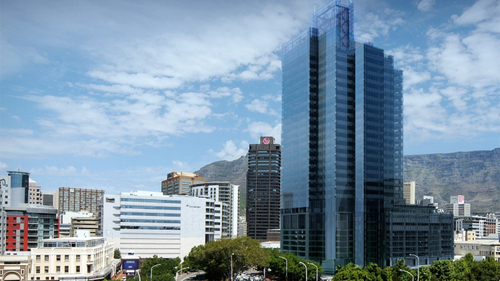


Premium Grade office space achieved rentals of R285/m² (USD: 15.41/m²) during October 2026, with available stock currently at 17 837 m². This segment continues to reflect demand for high-quality commercial property.
A Grade office space achieved rentals of R150/m² (USD: 15.65/m²), with current stock availability of 41 444 m². The sector continues to offer competitive commercial property at more accessible rental levels.
Rental figures exclude VAT.

Retail space achieved rentals of R401 - R140/m² (USD: 21.66 - 7.57/m²) during October 2026, with available stock currently at 7 901 m². This segment continues to reflect demand for high-quality retail property.
Market Activity retail space continues to show steady demand across key nodes, with availability levels reflecting ongoing tenant movement and consistent absorption within the sector.
Rental figures exclude VAT.

Industrial space is not currently recorded in this area, as the node is classified as non-industrial with no active supply or rental activity during October 2026.
Market Activity this area shows no industrial market presence at present, with no recorded logistics, warehousing, or manufacturing stock available for analysis in this period.
Office and Commercial Space in Cape Town CBD: What Tenants and Occupiers Need to Know.
Cape Town CBD is the commercial heart of the Western Cape and one of South Africa’s strongest-performing central business districts. Covering approximately 1.6 km², it accommodates more than one million square metres of office space and approximately 270,000 square metres of retail space. The CBD supports a broad mix of occupiers, including businesses in retail, legal services, healthcare, BPO, finance and banking, food and hospitality, architecture and engineering, technology, communications, and general corporate sectors, alongside a significant government and regulatory presence.
For businesses considering office space, the CBD offers a clear range of building grades, including Premium or P-grade, A-grade, and B-grade office buildings. The area is also informally divided into several sub-precincts, each suited to different occupier needs. The Foreshore appeals to larger tenants that require substantial floor plates, parking, and direct access to the N1 and N2. Lower Long Street and the Financial District are well suited to law firms, financial services businesses, and consultancies, supported by the concentration of professional services in the area. St Georges Mall and Adderley Street combine office space, retail activity, and strong public transport links, making them attractive to smaller businesses, NGOs, and service providers.
East City attracts creative, technology, and media firms that value its independent character and more flexible lease structures. Lease terms in the CBD typically range from three to five years, although shorter terms are available in some buildings. Serviced offices and managed workspaces also provide flexible options for growing businesses or firms testing a central location before committing to a longer-term lease.
The Cape Town CBD Investment Case: What Owner-Occupiers and Investors Should Know.
Cape Town CBD presents a compelling case for long-term capital growth and income-producing investment, supported by relatively low vacancy rates, ongoing development activity and strong business confidence. According to the SAPOA Office Vacancy Report for Q4 2025, Cape Town's office vacancy rate stood at 6.1%, compared with 15.8% in Johannesburg and 12.1% in Durban. This relatively tight vacancy environment is likely to support rental resilience and reduce the risk of extended vacancy between tenants.
The development pipeline also remains strong. In 2024/25, the total value of property development in the Cape Town CBD reached R9.031 billion, up from R7.285 billion in 2023. The overall official value of property in the CBD is R42.5 billion, based on the City of Cape Town's 2022 property valuation, with more than R4 billion in additional developments in the planning phase.
The CBD is home to 3,290 business entities, with growth recorded across 11 of 18 sectors in 2024, including finance, investment, insurance, communications, education, property, coworking and legal services. Together, these trends point to sustained confidence in the CBD from occupiers, developers and investors.
Cape Town CBD: A Complete Commercial Property Guide
Cape Town's Central Business District occupies a unique position in South Africa's property landscape. It is the country's most economically resilient city centre, a point of difference that has attracted sustained attention from businesses, developers and investors for well over a decade. This guide gives you a grounded view of the area — its geography, its market dynamics, its infrastructure, and what to expect whether you are leasing, buying or investing here.
Location and Geographic Boundaries
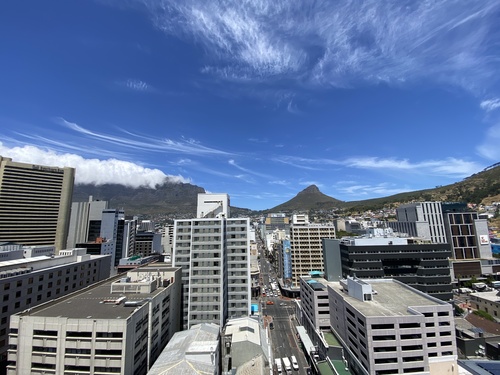
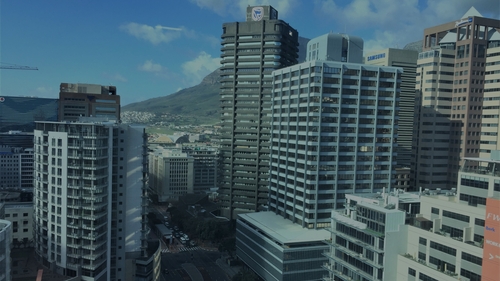
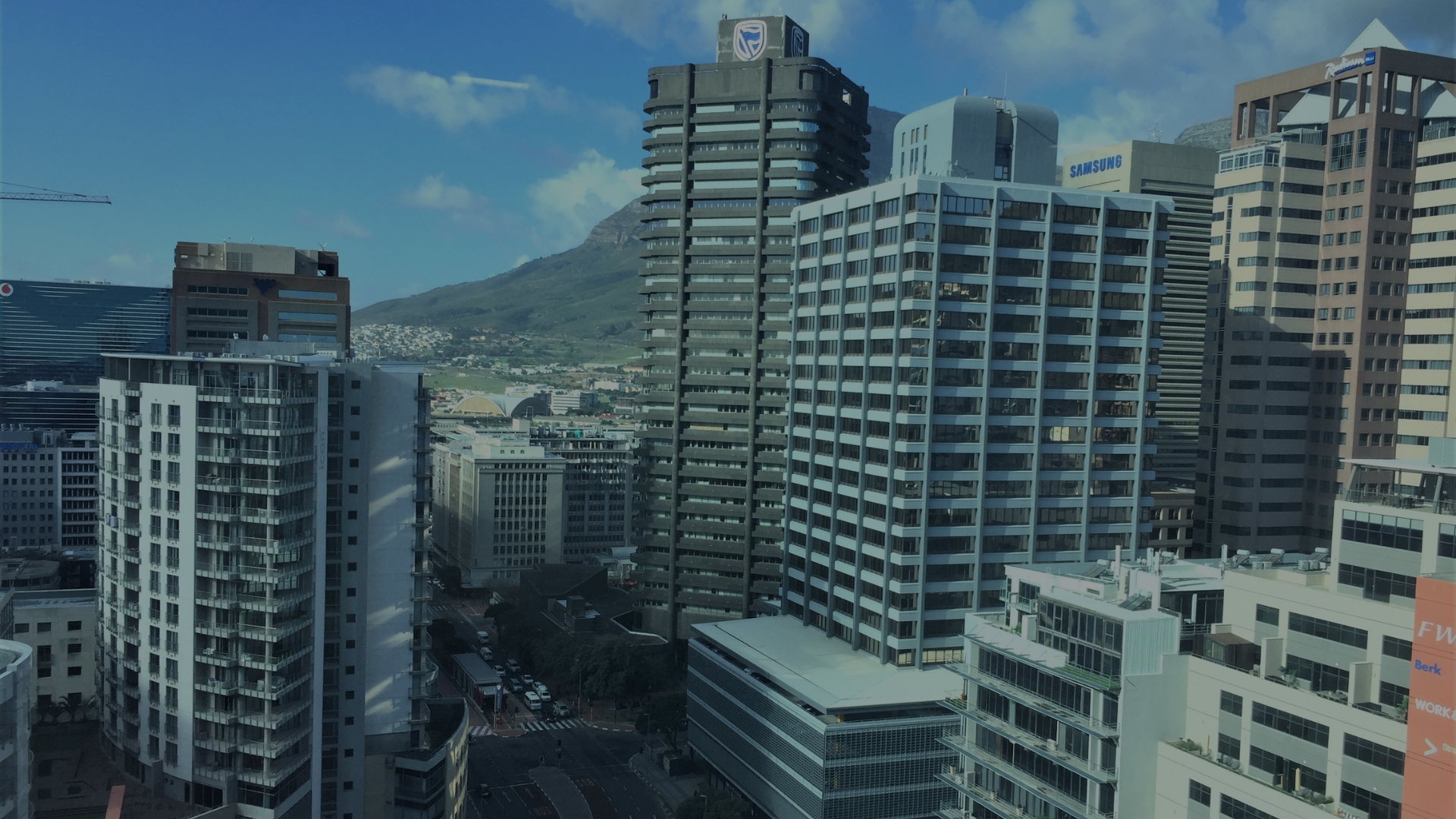
Cape Town CBD sits in the City Bowl, positioned between the Port of Cape Town and Table Mountain. It is bordered to the north by the Foreshore and the N1/N2 freeway interchange, and extends south toward De Waal Drive and the lower slopes of Signal Hill. The CCID's operational footprint covers 1.6 km², making it a compact but highly active district. The CBD connects directly to the V&A Waterfront, the N1 toward the northern suburbs, the N2 toward the airport and southern Cape, and via public transport to the southern suburbs, Atlantic Seaboard and communities further afield. This central position means the CBD draws workers, clients and visitors from across the metropolitan area.
The Cape Town City Center Office Market in Detail
The Cape Town CBD office market offers a range of building grades suited to different business requirements and budgets. P-grade buildings are the newest and most highly specified, with modern finishes, strong ESG positioning, high parking ratios and building management systems. A-grade buildings form the bulk of available stock and offer reliable infrastructure and established tenant mixes. B-grade buildings are older but functional, and suit cost-conscious businesses that value central location above specification. The East City and parts of the Foreshore also offer larger floor plates, making them well suited to call centers, back-office operations and technology firms requiring open plan space.
Cape Town CBD has fully embraced the global 15-minute city concept, with walkable urban precincts where businesses can access clients, services, food and accommodation all within a few city blocks. This is increasingly relevant to businesses competing for talent, as employees place growing weight on commute times, walkability and access to amenity during the working day.
Mixed-Use Development and Urban Transformation
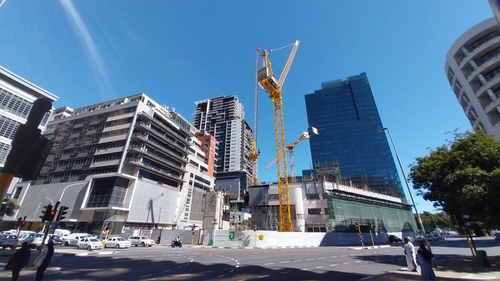
The Cape Town CBD has undergone significant transformation over the past decade, driven by a deliberate shift toward mixed-use development. The redevelopment of the iconic Golden Acre on Adderley Street and the construction of One on Bree Tower, a 131-metre mixed-use skyscraper on the Foreshore's Bree Street, are among the most visible projects currently underway. These developments combine office, retail, hospitality and residential components, which increases foot traffic and sustains demand across all uses. Two new high-rise hotels, Mama Shelter Cape Town and One on Bree, are currently under construction and are expected to strengthen Cape Town's position as a year-round destination for both leisure and business travelers.
Explore Commercial Property by Precinct
The Cape Town CBD is not a single uniform area. It divides naturally into distinct precincts, each with its own character, building stock and tenant profile. Understanding where within the CBD your business or investment sits makes a material difference to the value, visibility and performance of the property.
The Foreshore is the CBD's corporate address. It houses large-format office towers, direct freeway access to the N1 and N2, and proximity to the Cape Town International Convention Centre and the V&A Waterfront. It suits national and international firms that need substantial floor plates, ample parking and high corporate profile.
De Waterkant offers a premium, boutique commercial environment. P-grade buildings sit alongside the Cape Quarter retail precinct, attracting creative agencies, technology firms and professional services businesses that want quality space in a vibrant, walkable setting.
Mid-City and the Financial District along Lower Long Street and Bree Street form the heart of the legal, banking and financial services cluster. Proximity to the High Court, major banks and professional institutions makes this the natural address for law firms, consultancies and financial advisors.
East City, centred on Harrington Street and the Design District, draws creative businesses, media companies, architects and technology firms. Buildings here tend to offer more flexible layouts and shorter lease terms, and the precinct has a distinct urban character that appeals to industries where environment and culture matter.
Gardens and Lower Gardens provide a quieter, tree-lined alternative to the core CBD. Office space here suits professional practices, NGOs, government-related businesses and firms that want central positioning without the density of the financial district.
The Convention District anchors around the CTICC and includes some of the CBD's largest commercial buildings and hotels. It is well suited to businesses in hospitality, events, consulting and any sector that benefits from proximity to a major international conference venue.
Zonnebloem and East Foreshore sit on the periphery of the core CBD and offer cost-effective commercial space with good freeway access. These precincts attract back-office operations, call centers and businesses that prioritise space and connectivity over address prestige.
Residential development in the CBD has grown substantially, with approximately 7,000 residential units now in place and developments for thousands more in progress. This growth in the residential population directly benefits commercial tenants and landlords by increasing foot traffic, supporting ground-floor retail, and extending the vibrancy of the CBD beyond standard office hours.
Urban Management and Safety
Unlike many other CBDs in South African metropolitan areas, Cape Town CBD is considered clean and safe, and has been well maintained in terms of infrastructure. Numerous public-private partnerships exist to keep the CBD a desirable place to be, including the Cape Town Partnership and the Cape Town Central City Improvement District. Security is actively managed by the CCID, with foot patrols, CCTV coverage and dedicated response teams enhancing safety for property owners, tenants and visitors. This consistent investment in urban management has made Cape Town CBD one of the few South African city centers where the environment actively supports business growth rather than inhibiting it. In October 2025, Cape Town CBD hosted the International Downtown Association World Towns Leadership Summit, where the CBD received recognition for its public-private partnership model, which has reversed urban decay and attracted major investment. Recognition was also given for the CBD's proactive safety measures, cleanliness and walkable, coastal urban culture.
Transport and Connectivity
Getting to and from the Cape Town CBD is straightforward by most modes of transport. The MyCiTi rapid transit network connects the CBD to the Atlantic Seaboard, Blouberg, Table View and, via ongoing expansion, communities in the metro south-east. Metrorail services link the CBD to the southern suburbs, though reliability on rail continues to vary. The CBD is also walking and cycling-friendly, with cycle lanes and pedestrian-friendly streets that have improved access and reduced congestion during peak hours. For businesses reliant on private vehicle access, parking is available in several multi-storey facilities across the CBD, and buildings with basement or structured parking command a premium in the rental market. The proximity to the N1 and N2 interchange gives the Foreshore precinct in particular strong appeal for occupiers with logistics or distribution requirements.
Key Tenants and Industries in the CBD
The Cape Town CBD attracts a wide spectrum of businesses. Major occupiers include financial institutions, legal firms, insurance companies, technology businesses, media groups, retail brands and fashion designers. The presence of the High Court, Parliament of South Africa and the Western Cape Provincial Parliament makes the CBD a natural base for legal professionals and government affairs-related businesses. The CBD is also home to a growing number of coworking spaces and innovation-focused tenants, reflecting broader shifts in how businesses use office space.
What the Market Means for You
If you are looking for office, retail or mixed-use space in the Cape Town CBD, you are operating in a market that rewards preparation. Vacancy rates are low compared to the national average, quality stock is in limited supply, and well-located buildings fill quickly. Understanding the precinct, the building grade and the full cost of occupation before you start negotiations puts you in a stronger position.
If you are a landlord or investor, the Cape Town CBD remains South Africa's most compelling commercial property node. Strong tenant demand, below-average vacancy, active development and high business confidence combine to create conditions that support both capital growth and income stability. Buildings that invest in quality, sustainability and tenant experience consistently outperform those that do not.
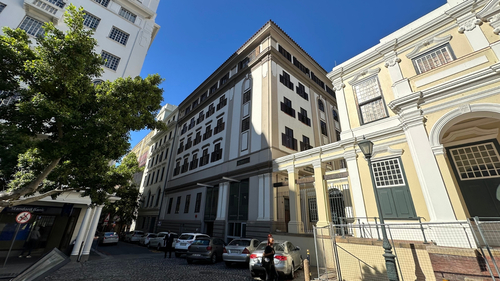
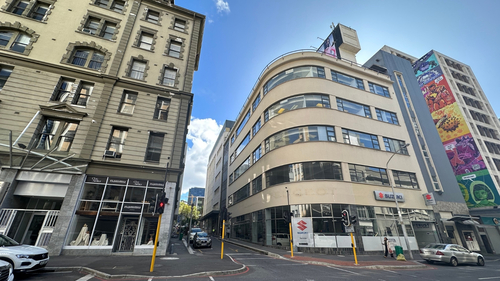
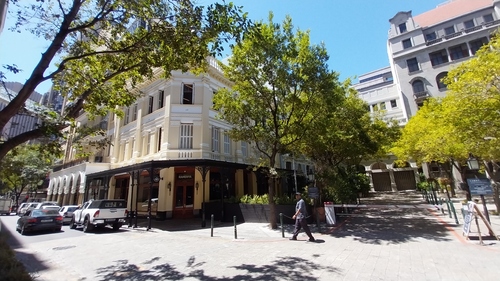
Cape Town CBD has a broad selection of commercial buildings, ranging from established office towers to newer P Grade developments. Businesses looking for offices to rent in Cape Town CBD can choose between large corporate floorplates, smaller fitted offices and modern premium-grade accommodation.
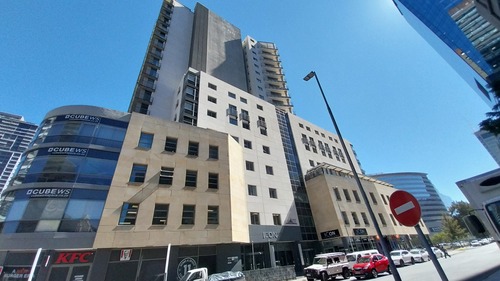
Thibault Square is one of the established office addresses in the lower CBD, close to the Foreshore and within walking distance of Cape Town Station and several MyCiTi routes. Its position provides convenient access to the N1 and N2 and places businesses close to hotels, restaurants and financial services. The building suits companies looking for a central CBD address with good public transport access. Office options vary in size and configuration, with upper floors providing views across the city and surrounding areas. Its location also allows employees to move easily between the CBD, Foreshore and V&A Waterfront.
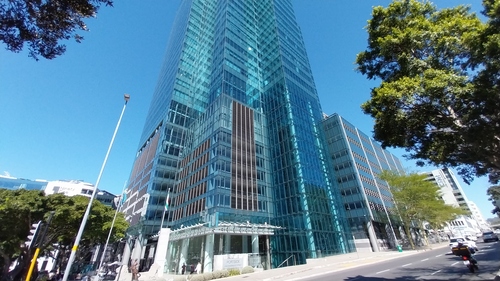
The Box at 9 Lower Burg Street is a prominent commercial tower in the Cape Town CBD. Formerly known as the ABSA Centre, the building has undergone substantial redevelopment and offers modern office accommodation across large corporate floorplates. The Box is particularly relevant to larger businesses, professional firms and corporate occupiers looking for a central location with access to public transport and the city's main road network. The building provides secure parking, backup power and modern building infrastructure, while its Lower Burg Street position places tenants within easy reach of the Foreshore and central CBD.
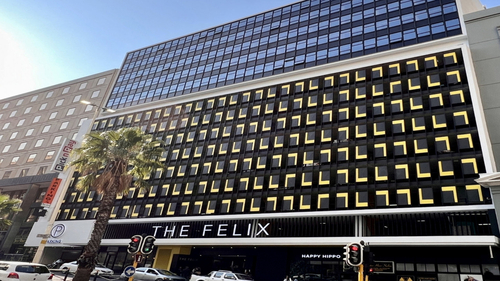
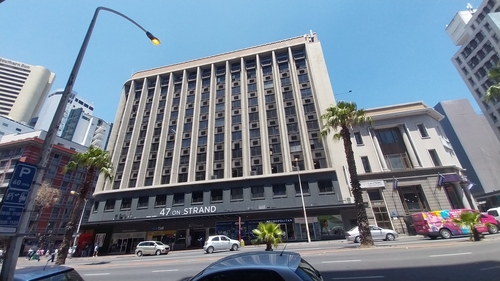
Located at 58 Strand Street, The Felix is a mixed-use commercial building combining offices, retail and extensive parking. Formerly known as Picbel Arcade, the property has undergone significant refurbishment and now provides more than 10,000 m² of office accommodation. Businesses can find both fitted and white-box offices, including larger floorplates suitable for companies requiring substantial workspace. The building also provides fibre connectivity, backup infrastructure, 24-hour security and access to approximately 881 parking bays. Its Strand Street location gives employees straightforward access to public transport and the surrounding CBD.
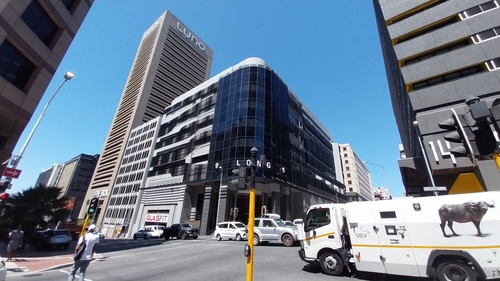
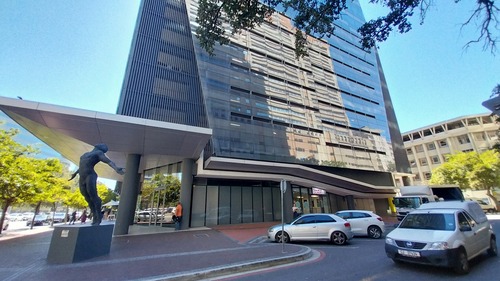
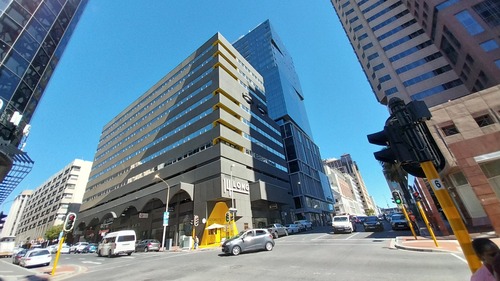
35 Lower Long is one of the newer premium office developments in Cape Town's lower CBD. Positioned close to the Foreshore, the building provides modern P Grade office accommodation aimed at businesses requiring a high-specification corporate environment. Its position provides quick connections to the N1 and N2, while Cape Town Station, MyCiTi services and other public transport options are within walking distance. The building's location also places tenants close to the CTICC, hotels and the wider Foreshore business district.
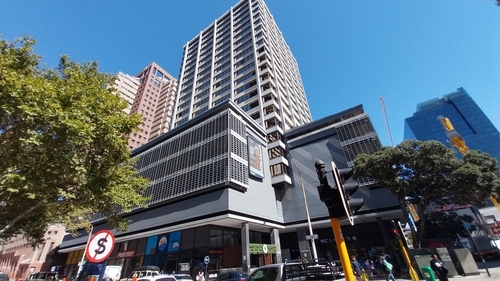
The Rubik is a modern mixed-use development on the corner of Loop and Riebeek Streets. The building combines premium office accommodation with residential and retail components in the lower CBD. The office component provides businesses with contemporary commercial space close to Bree Street, Long Street and the Foreshore. Its central position offers access to restaurants, coffee shops, hotels and public transport, while the N1 and N2 can be reached from the lower CBD road network.
Rennie Knight Frank operates across the full Cape Town CBD market. We give you direct access to available listings, market intelligence and professional advisory support backed by the global Knight Frank network. Contact our Cape Town team to discuss your requirements.
Cape Town's CBD remains an established retail destination, supported by a combination of office workers, residents, tourists and visitors. Retail activity is spread across several distinct precincts, from the traditional shopping areas around Adderley Street and St Georges Mall to the restaurant, hospitality and specialist retail businesses concentrated along Bree Street, Loop Street and Long Street.
The Cape Town Central City Improvement District (CCID) recorded 274,320 m² of retail space across the CBD at the end of 2025, of which 257,875 m² was occupied. Retail vacancies stood at 6%, unchanged from the previous year, while occupied retail space increased by 4.4%. The completion of The Mutual shopping centre on Strand Street, anchored by Checkers and Mr Price, also contributed approximately 7,500 m² of new retail accommodation.
Retail confidence has remained positive. The CCID's fourth-quarter 2025 Business Confidence Survey reported that 97.8% of surveyed business owners were satisfied with business conditions, while 86.9% expected business growth during 2026. This reflects confidence in the wider CBD business environment, although individual retail performance continues to depend on location, operating costs and customer demand.
Retail leasing conditions differ considerably across the city centre. Bree Street and Loop Street accommodate restaurants, cafés, lifestyle retailers and specialist businesses, while Adderley Street, Strand Street and St Georges Mall provide more traditional retail environments, supported by public transport connections and established pedestrian routes. Mixed-use commercial buildings also contribute to the CBD's retail offering. Developments such as The Rubik on Loop Street and 16 on Bree provide opportunities for retailers seeking a presence in prominent city-centre buildings. The Felix on Strand Street and 35 Lower Long Street offer alternative retail settings, while Thibault Square and City Park accommodate ground-floor commercial premises serving surrounding businesses and visitors.
See all Retail Space to Rent in Cape Town CBD
For prospective tenants, the suitability of a retail premises extends beyond the rental rate. Shopfront visibility, pedestrian access, surrounding businesses, signage rights, loading facilities, trading hours and permitted use are important considerations. Restaurant operators must also assess extraction, grease traps, electrical capacity and applicable municipal approvals.
Frequently Asked Questions: Commercial Property in Cape Town CBD
What is the office vacancy rate in Cape Town CBD?
Cape Town's overall office vacancy rate stood at 6.1% as at Q4 2025, making it the lowest of any major metropolitan area in South Africa. Johannesburg's vacancy rate over the same period was 15.8% and Durban's was 12.1%. The low vacancy rate in Cape Town reflects strong and consistent tenant demand relative to available supply.
What types of businesses operate in Cape Town CBD?
The Cape Town CBD is home to a wide range of industries. The top sectors by number of businesses are retail, legal, medical, finance and banking, food and hospitality, architecture and engineering, technology, communications and general corporate. The CBD also houses Parliament, the Western Cape Provincial Government, the High Court and over 23,000 government employees, making it a natural base for legal, regulatory and government-facing businesses.
Is Cape Town CBD a good area to invest in commercial property?
Cape Town CBD is currently the strongest performing commercial property node in South Africa. The total value of property development in the CBD reached R9 billion in 2024/25, business confidence hit an all-time high of 97.8% in Q4 2025, and the office vacancy rate remains well below the national average. Constrained supply of new commercial stock and sustained tenant demand support above-inflation rental growth for well-located, well-maintained assets.
What lease terms are typical for office space in Cape Town CBD?
Most commercial leases in the Cape Town CBD run for three to five years. Shorter terms are available in certain buildings, particularly those offering serviced offices or managed workspace. Annual escalation clauses are standard, typically ranging between 7% and 10% per year. Landlords in A-grade and B-grade buildings are currently offering incentives in some cases, including rent-free periods or tenant installation allowances, depending on the size and term of the lease.
Which precinct in Cape Town CBD is best for my business?
The right precinct depends on your industry, your team size and your priorities. The Foreshore suits large corporate occupiers needing substantial floor space and freeway access. De Waterkant and the Mid-City financial district attract professional services, legal and technology firms. East City appeals to creative and media businesses. Gardens and Lower Gardens offer a quieter environment for professional practices and NGOs. Contact Rennie Knight Frank for specific precinct guidance based on your requirements.
Content accurate as at September 2026. Market data sourced from publicly available commercial property research.



Direct marketing and distribution to our vast broker network.

Securing the best possible terms with new tenants and managing renewals.

Handling the entire process from lease preparation to deposit collection.
Please enter your email address below. Once submitted, you will receive your requested report as an attachment via email.
Call us to discuss your requirements - we're awaiting your call.


Search Knight Frank SA: You can't beat local passion backed by global support.